Microfabricated alkali vapor cells for compact atomic sensing applications
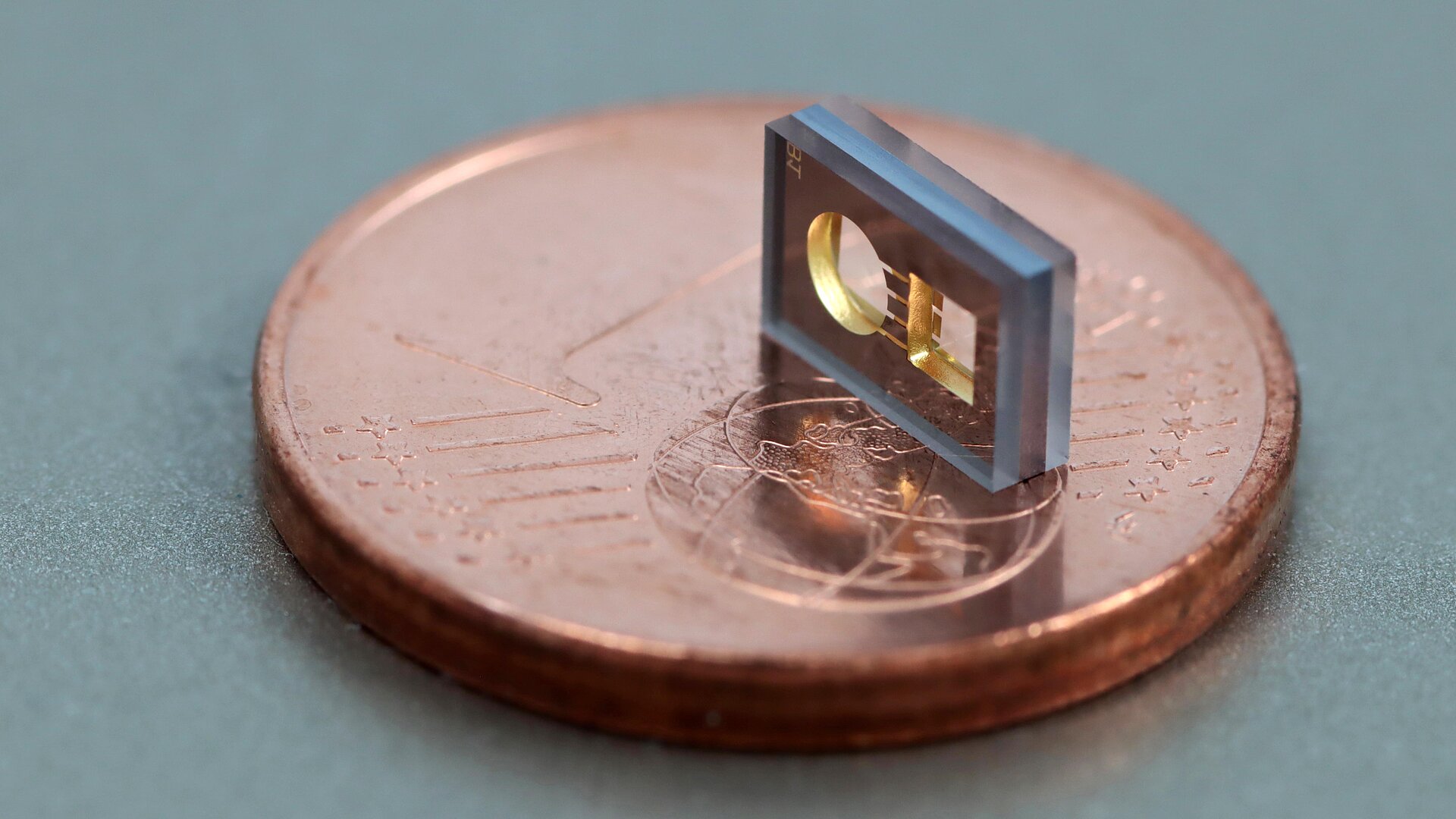
Fig. 1: Microfabricated vapor cell.
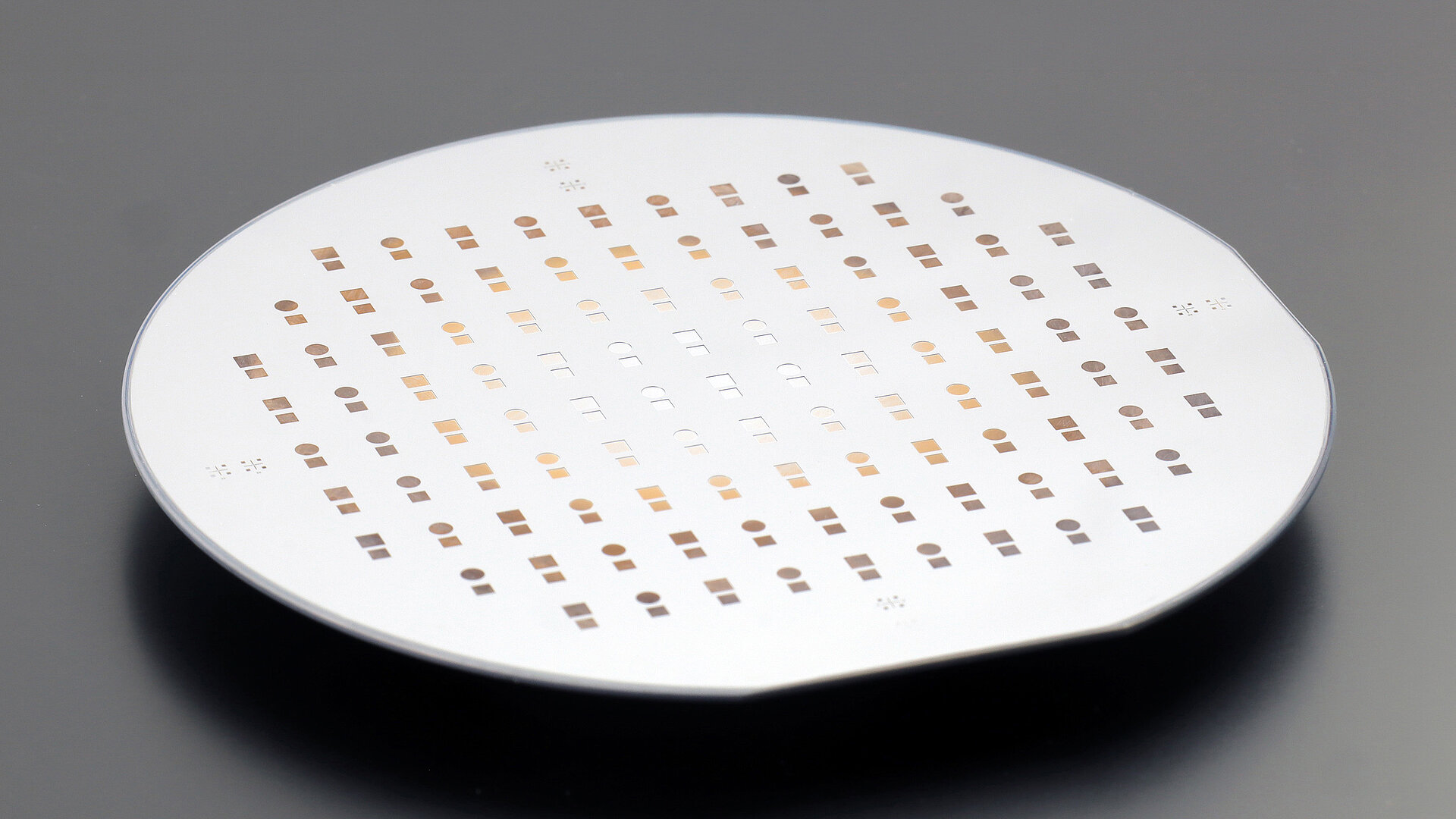
Fig. 2: Inclined view on the cells after the first etching step.
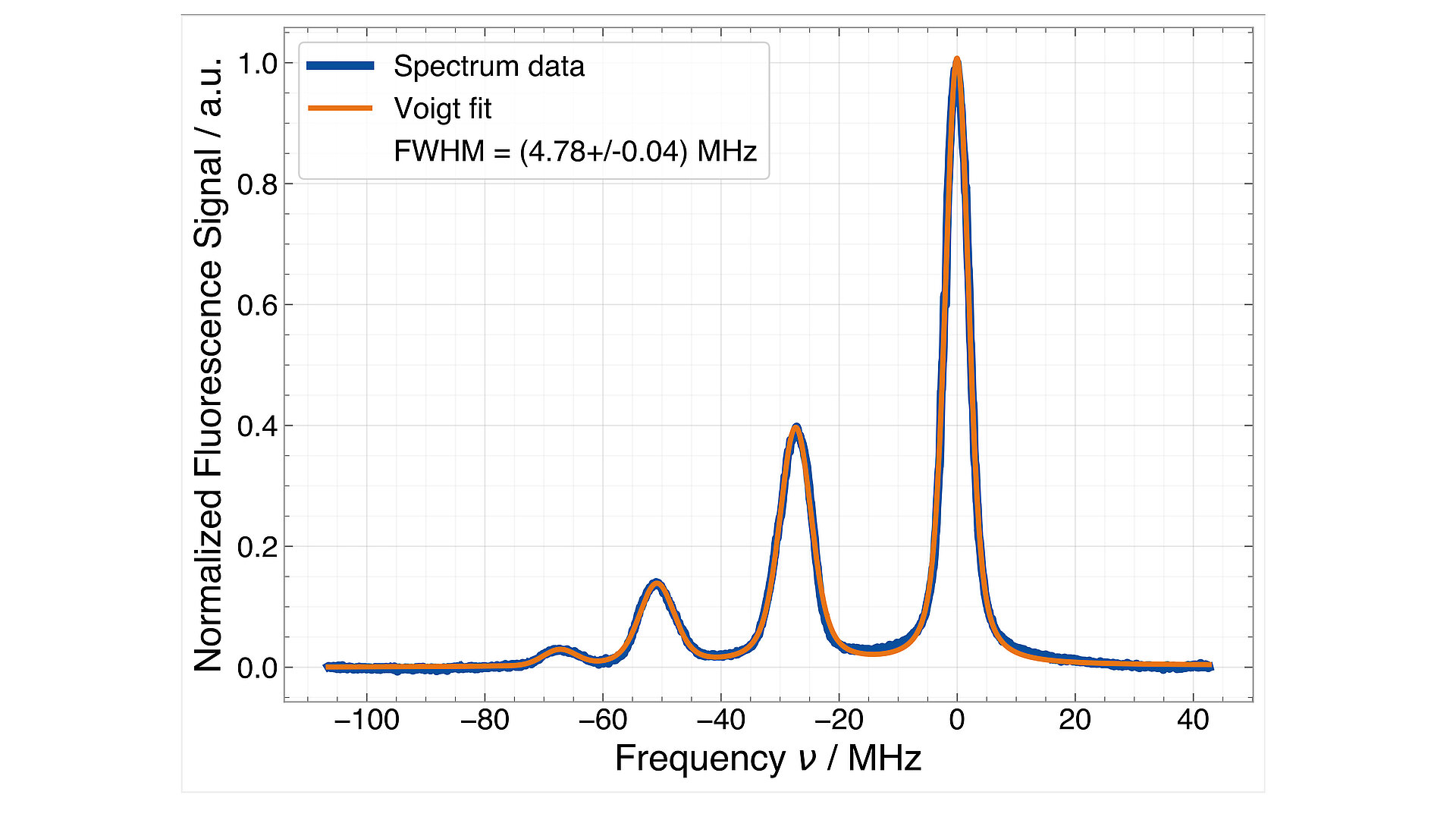
Fig. 3: Results of the characterization of a rubidium filled vapor cell.
Alkali vapor cells are a key component in integrated atomic devices such as optical clocks, inertial sensors, magnetic and electric field measuring devices, and gravimeters. They are used, e.g., in optical frequency references to stabilize a laser’s frequency to an atomic transition. While laboratory-based references typically have volumes of several liters, compact references, as used in space, are below 0.5 l, with glass blown cells of about 0.1 l.
We have developed a MEMS-based production process for miniaturized cells (Fig. 1). It allows the shrinking of the cell volume to only 0.1 ml (6 x 8 x 2 mm3) while yielding optical properties that are comparable to, or better than, those of commercially available cells. The use of semiconductor processing technology further allows cost efficient scaling to large production volumes and excellent reproducibility.
The process is based on structuring a silicon wafer of only 1 mm thickness with FBH’s plasma and laser etching technologies to create the required cavities while preserving the excellent smoothness of the wafer. This smoothness is necessary for the anodic bonding of a glass wafer to each side of the silicon. To achieve narrow absorption lines, a low residual gas pressure inside the cell is required. Excellent vacuum conditions during the 2nd bonding step enable narrow linewidths of our cells.
Our technology allows the processing of 102 cells on a single 100 mm wafer (Fig. 2). After bonding, the wafers are diced into individual cells that can be activated by a high-power laser system available in FBH’s Joint Lab at Humboldt-Universität zu Berlin.
A compact rubidium spectroscopy module developed at FBH and utilizing these MEMS cells shows the potential of future chip-scale rubidium frequency references and enables the transition towards more robust and scalable prototypes. The results of the optical characterization of a rubidium filled cell are shown in Fig. 3. The full width half maximum of the transition line is only about 4.8 MHz, which is a factor of two narrower compared to typical commercial MEMS cells.
Publications
A. Thies, L. Schellhase, K. Gehrke, J. Wollenberg, D. E. Kohl, “Microfabricated Alkali Vapor Cells for small footprint applications”, Waferbond 2025.
D. E. Kohl, J. Kluge, M. Eisebitt, J. Wollenberg, K. Döringshoff, M. Krutzik, “Towards Miniaturized Spaceborne Rubidium Two-Photon Frequency References”, DPG Jahrestagung 2025.
M. Eisebitt, J. Kluge, D. E. Kohl, K. Döringshoff, M. Krutzik, “Development of a Rubidium Two-Photon Frequency Reference for Demonstration in Space”, EFTF/IFCS Conference 2025.