Compact laser modules below 620 nm enable scalable quantum and industrial applications
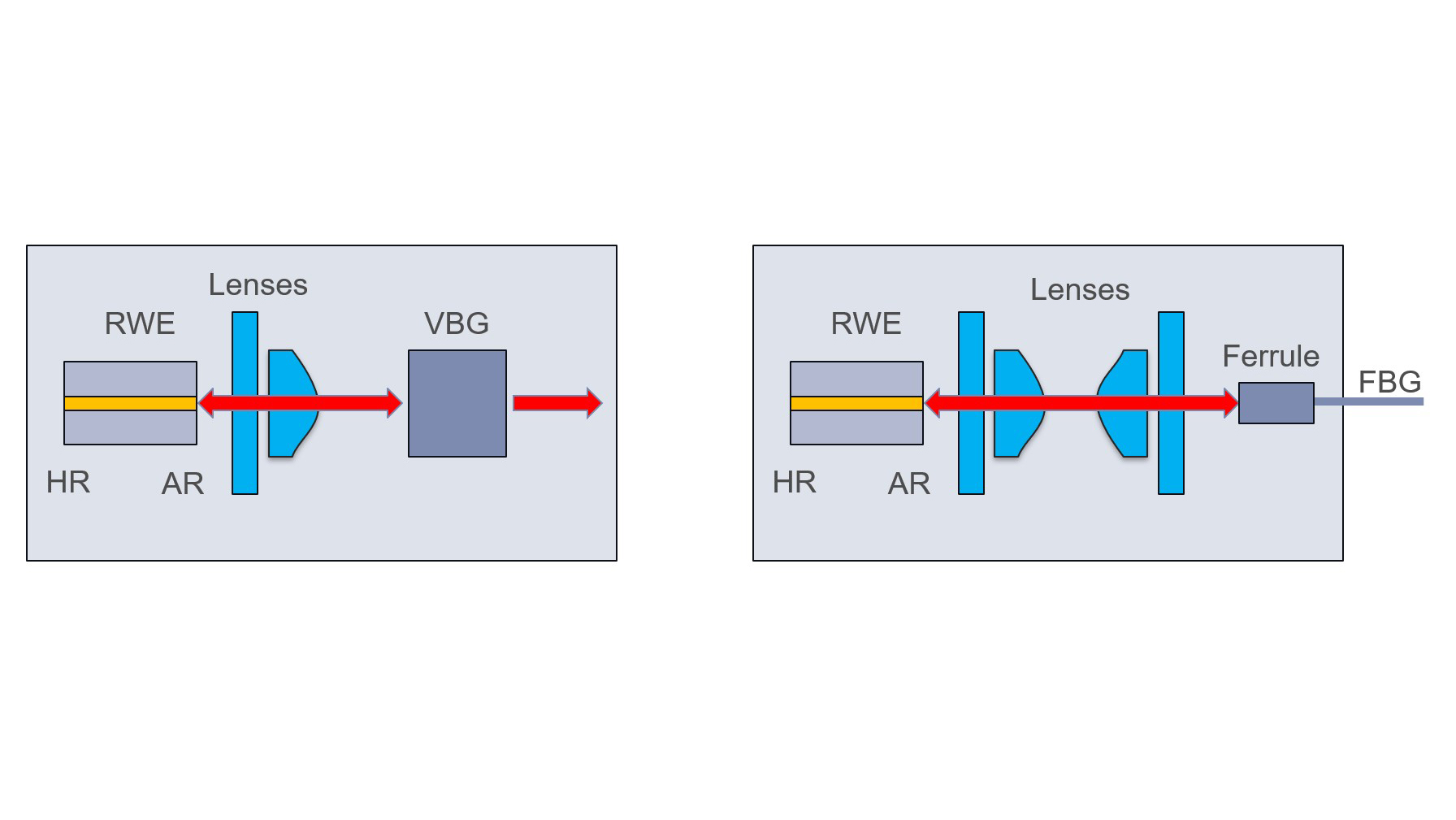
Fig. 1: Schematic drawings of the VBG (left) and FBG (right) module, where the RWE is a ridge waveguide emitter acting as the gain medium with a high reflective (HR) and anti-reflective (AR) coated facet. Aspheric cylindrical lenses are used for beam shaping.
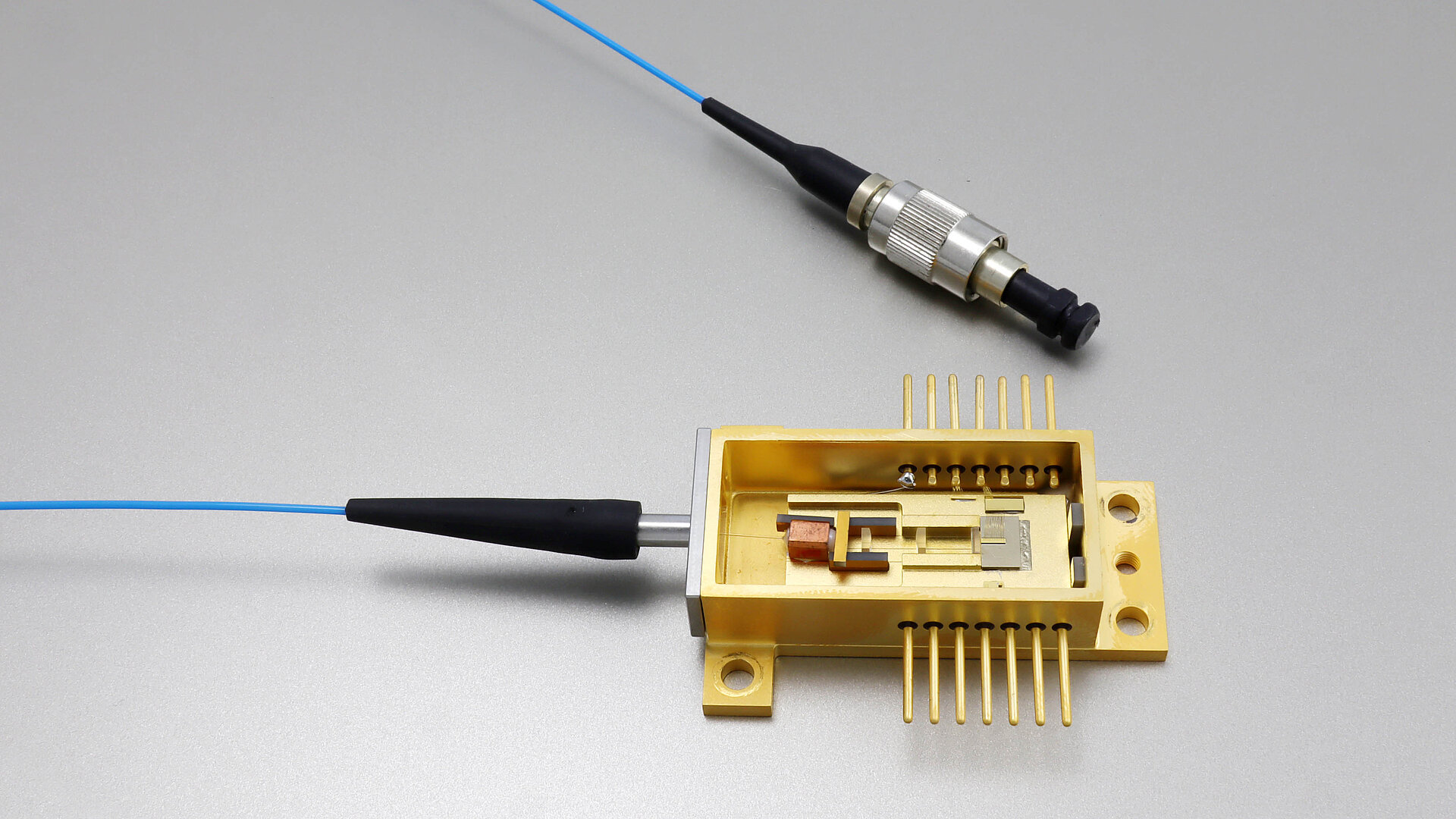
Fig. 2: Photograph of the realized FBG module.
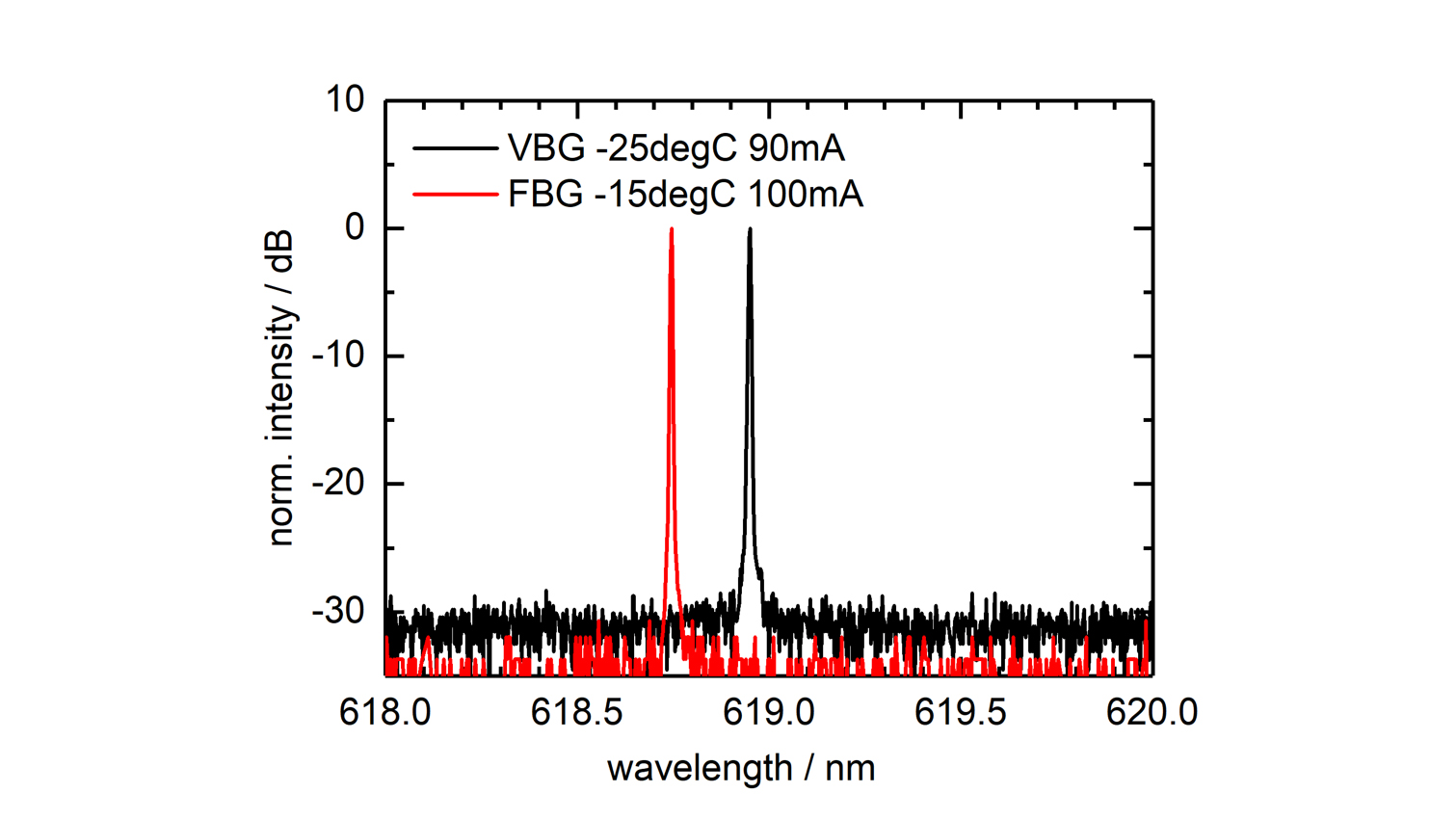
Fig. 3: Emission spectra of the VBG module (in black) and the FBG module (in red).
We have developed wavelength-stabilized diode laser modules emitting at 619 nm, a wavelength of growing importance for quantum technologies, spectroscopy, and automotive display systems. For example, laser emission near 619 nm is essential for exciting tin-vacancy centers in diamond, a promising platform for quantum repeaters used in quantum communication networks.
Compact, wavelength-stabilized laser sources below 620 nm – such as those now realized at FBH – have so far not been available worldwide. The newly developed modules represent a breakthrough towards further miniaturization of visible laser systems, paving the way for scalable integration in quantum and industrial technologies. The modules combine the efficiency and compactness of diode lasers with the spectral stability typically achieved only by complex solid-state systems. Traditional light sources for this wavelength rely on nonlinear frequency conversion of infrared lasers – resulting in devices and setups that are bulky, inefficient, and difficult to integrate. Our modules overcome these limitations by implementing direct diode emission with precise wavelength control.
Two stabilization concepts were realized and compared: fiber Bragg grating (FBG) and volume Bragg grating (VBG) feedback (see Fig. 1). Both setups are implemented in miniaturized 14-pin butterfly packages (see Fig. 2), using gain chips designed for 626 nm emission at room temperature. By thermoelectrically cooling the chips down to –25 °C, the gain peak shifts to the desired 619 nm wavelength. The FBG version delivers polarization-maintaining, fiber-coupled output suited for compact system integration, while the VBG module provides a robust free-space beam. Both are suitable for, e.g., quantum applications with tin vacancy centers in diamond.
Both variants achieve output powers exceeding 10 mW, a stabilized wavelength of 619 ± 0.1 nm, and a linewidth below 10 MHz (see Fig. 3). The compact design, combined with stable single-mode operation, enables deployment in scalable quantum systems and emerging industrial applications requiring efficient visible laser sources below 630 nm.
This development marks an important step toward energy-efficient, room-temperature laser modules for precision applications – from quantum optics and life sciences to automotive projection technologies.
Publications
F. Mauerhoff et al., “Miniaturized wavelength stabilized laser module emitting at 619 nm,” Proc. SPIE 13344, 133440I (2025).