Applied Physics Letters selects far-UVC LED study for its Rising Stars Collection
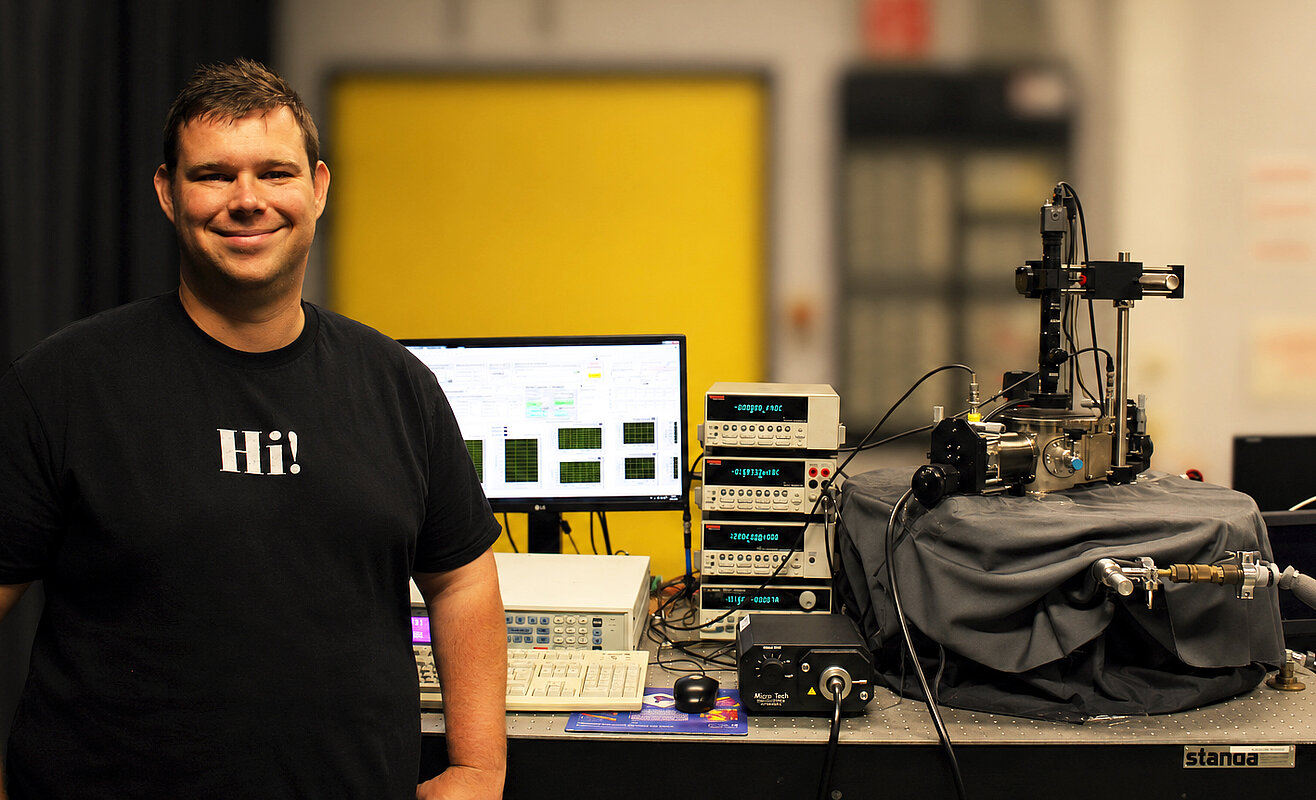
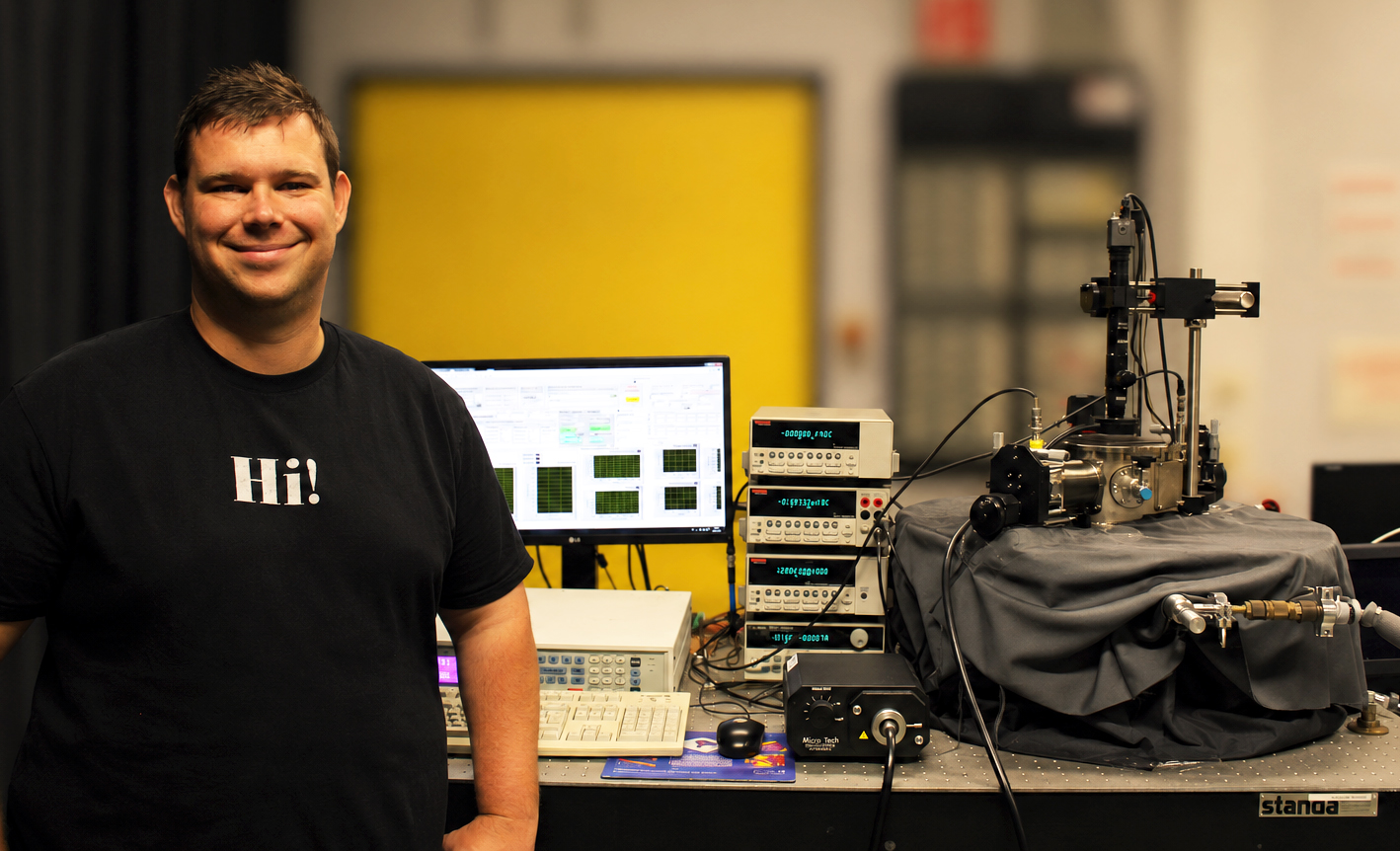
Applied Physics Letters has selected a study by TU Berlin and Ferdinand-Braun-Institut (FBH) for its 2026 Rising Stars Collection. The team led by Jakob Höpfner shows why far-UVC LEDs become less efficient at shorter wavelengths.
Researchers are exploring far-UVC light for applications such as air disinfection and inactivation of multidrug-resistant bacteria on the human skin, a major source of hospital-acquired infections. However, LEDs based on aluminum gallium nitride (AlGaN) lose efficiency sharply below 240 nm. A comparison at the Joint Lab GaN Optoelectronics, run by Technische Universität Berlin and Ferdinand-Braun-Institut (FBH), showed how much the optical output power drops. In the LEDs studied, the output power at 223 nm was one-fiftieth of that at 238 nm.
The team examined how efficiently charge carriers are injected into the active region, how efficiently they generate light there, and what fraction of that light escapes the LED. All three efficiencies declined at shorter wavelengths. The largest contributor to the overall decline was carrier injection efficiency, which fell from (22 ± 3) % at 234 nm to (2 ± 1) % at 223 nm.
Simulations suggest that higher aluminum content lowers the energy barriers that confine electrons to the active region. As a result, more electrons escape into the p-type layers without contributing to light generation. Improved quantum barrier designs or barrier materials with wider bandgaps could keep more electrons in the active region and improve LED efficiency.
The study is one of 35 papers in the 2026 Rising Stars Collection, a distinction earned by just under 1 % of the papers published annually in Applied Physics Letters. The collection recognizes outstanding research led by scientists within 10 years of earning their doctorates.
Jakob Höpfner’s coauthors were Paula Vierck, Markus A. Blonski, and Tim Wernicke (TU Berlin), Tim Kolbe, Sylvia Hagedorn, Jens Rass, Hyun Kyong Cho, Sven Einfeldt, and Markus Weyers (FBH), and Michael Kneissl (TU Berlin and FBH).
The Leibniz Association (“UV SimTec” project), the German Federal Ministry of Education and Research (“CORSA” project), and the European Union through Investitionsbank Berlin (“UV-Multi” project) supported the research.
Publication
J. Höpfner, P. Vierck, T. Kolbe, S. Hagedorn, J. Rass, H.K. Cho, M.A. Blonski, T. Wernicke, S. Einfeldt, M. Weyers, M. Kneissl: “Origin of the efficiency drop in far-UVC LEDs emitting between 218 and 238 nm”, Applied Physics Letters 127, 203304 (2025).