Tunnel junction apertures by ion implantation: the impact of ion scattering on measurement results
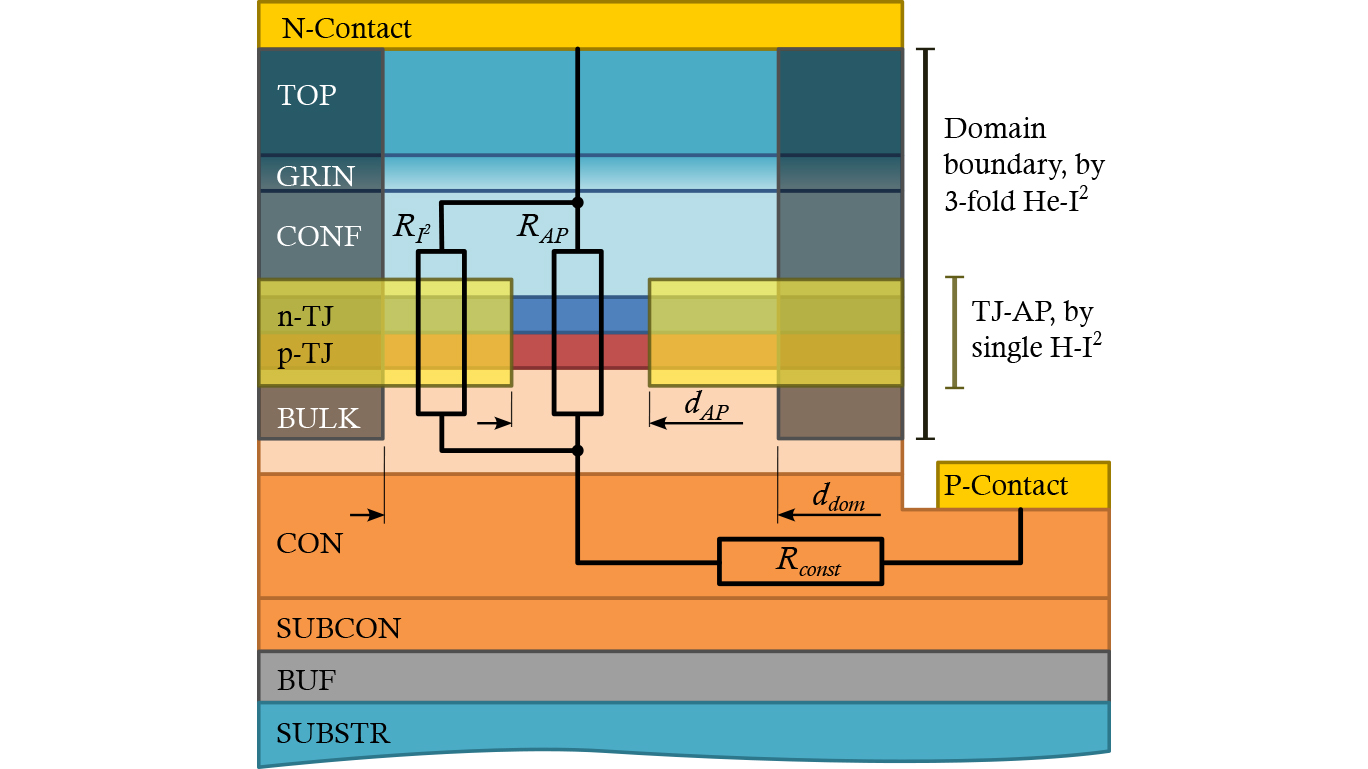
Fig. 1 Schematic of the manufactured tunnel junction (TJ) structure. I2 describes the ion-implanted domains.
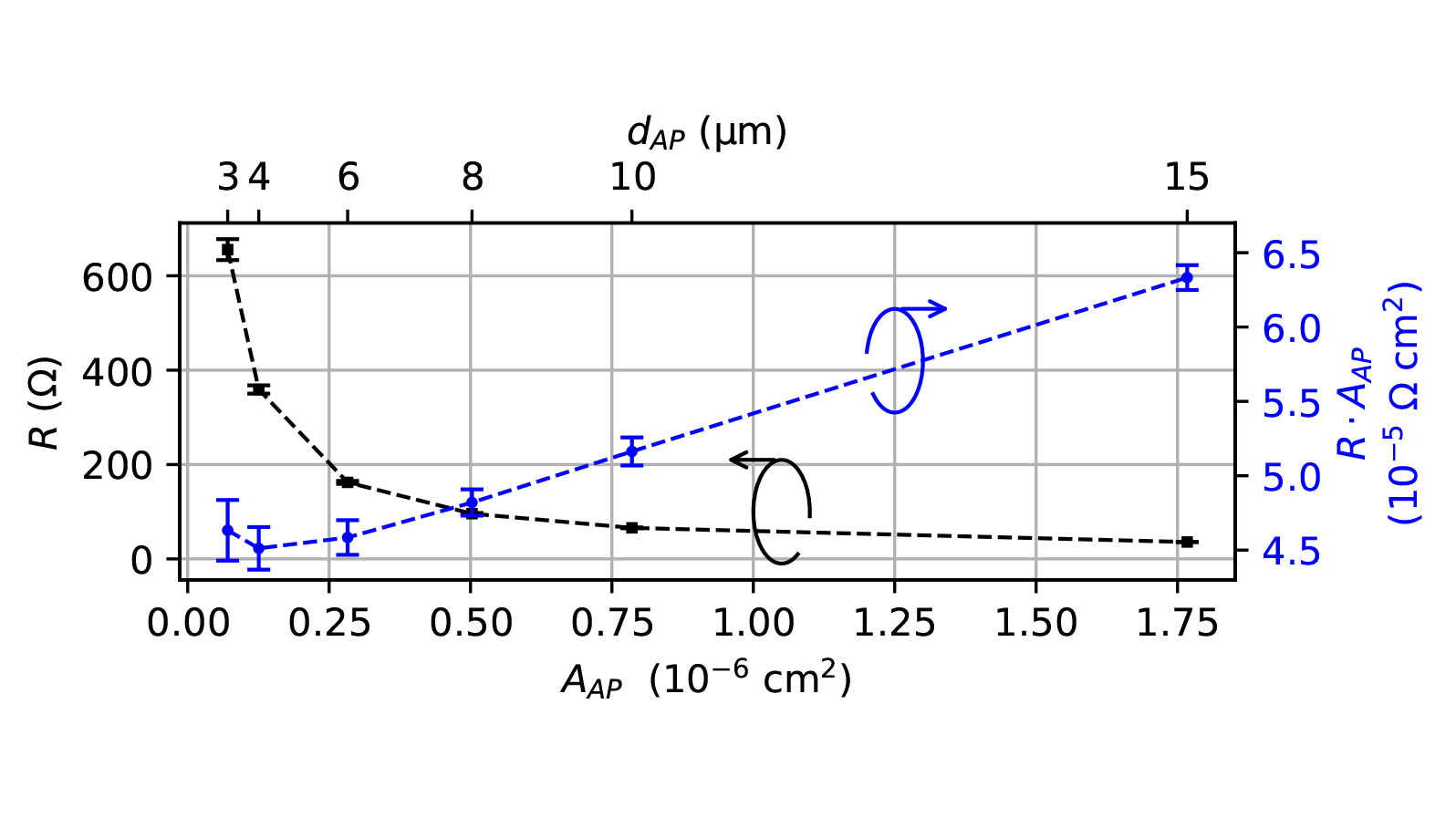
Fig. 2 Results for R and the R × AAP products over area AAP. R is extracted from the IV characteristics of the devices shown, evaluated in the negative voltage direction at −0.15 V. The dashed lines serve as guides for the eye.
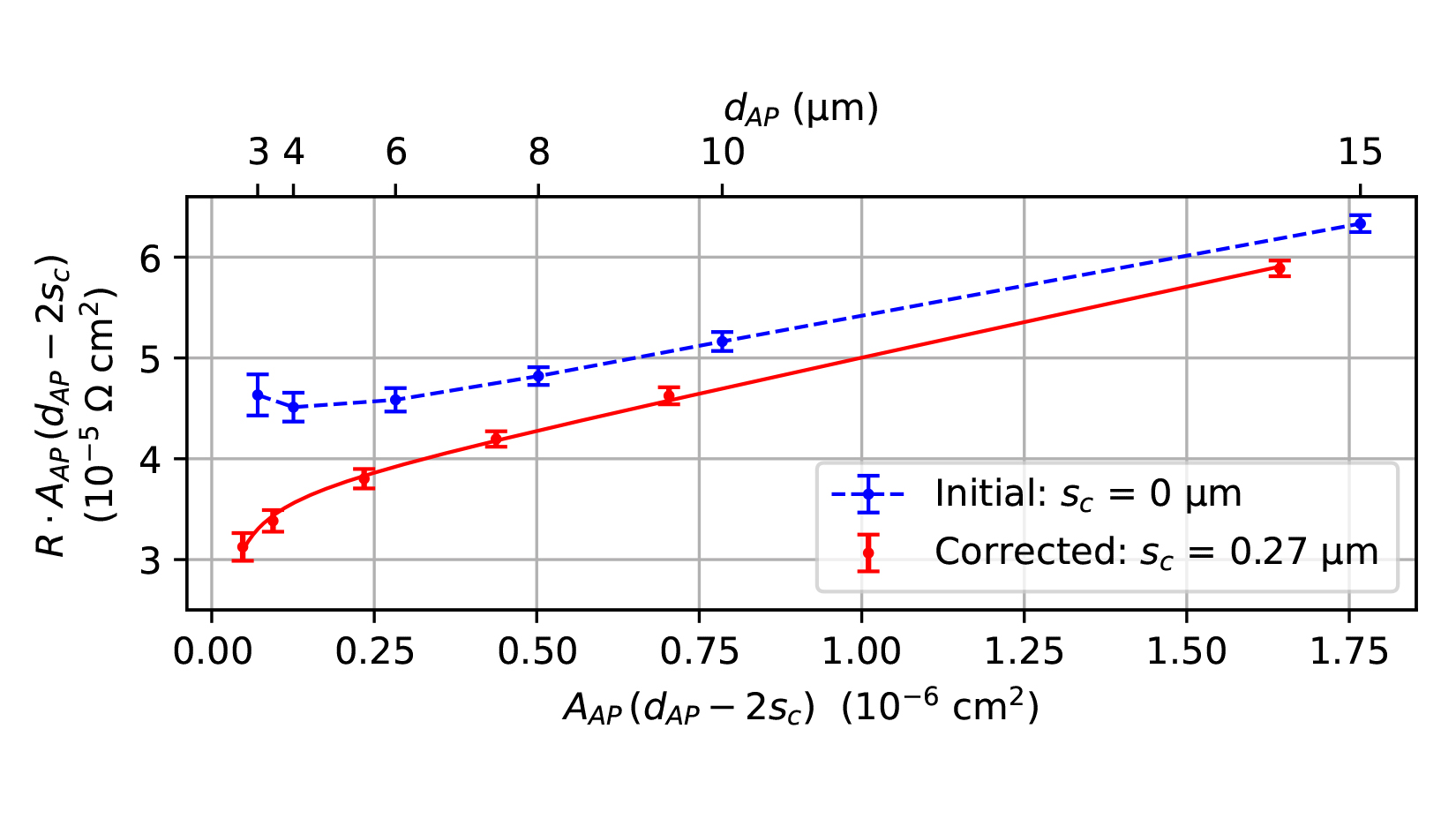
Fig. 3 Results for the R x AAP products over area AAP before (blue) and after (red) iterative straggle adjustment and fitting. The red line shows the fit according to the resistance model in Fig. 1. The dashed blue line serves as guide for the eye.
Current apertures for AlGaAs VCSELs based on GaAs tunnel junctions (TJs), laterally structured by proton implantation followed by annealing (see Fig. 1), offer a way to avoid lateral oxidation for aperture definition.
To assess the TJ resistance precisely, they were embedded into p-type layers at the bottom and n-type layers on top. For circular TJ apertures of various sizes with area AAP and diameter dAP, current-voltage characteristics are measured and the reverse resistance R is determined at −0.15 V. The analysis of the dependence of R over AAP revealed an inverse behavior as expected. However, when examining the product of the resistance with the intended area of the apertures, a non-linear trend appeared (see Fig. 2).
The reduced effective aperture diameter – caused by the lateral straggle sc of implanted protons – was accounted for by iterative fitting using the resistance network in Fig. 1. This procedure yielded the red fit curve in Fig. 3, enabling the extraction of a specific resistance of 3.7 × 10⁻⁵ Ω cm² for the tunnel junction aperture. The decrease in aperture radius by 0.27 µm, as determined by the fitting procedure, is consistent with the estimated straggle for the energy used, the layer structure above the TJ, and the implantation depth. Applying the same methodology to a more elaborate TJ layer structure resulted in a specific resistance of 9.1 × 10⁻⁶ Ω cm².
These results show that specific resistance can be evaluated across different aperture diameters without precise knowledge of the exact layer structure or implantation parameters.
This work was funded by the BMFTR within the QYRO project (contract no. 13N16317) as part of the funding program “Quantum technologies – from basic research to market”.