Novel GaN-based full-duplex front-end topology for communication and sensing systems
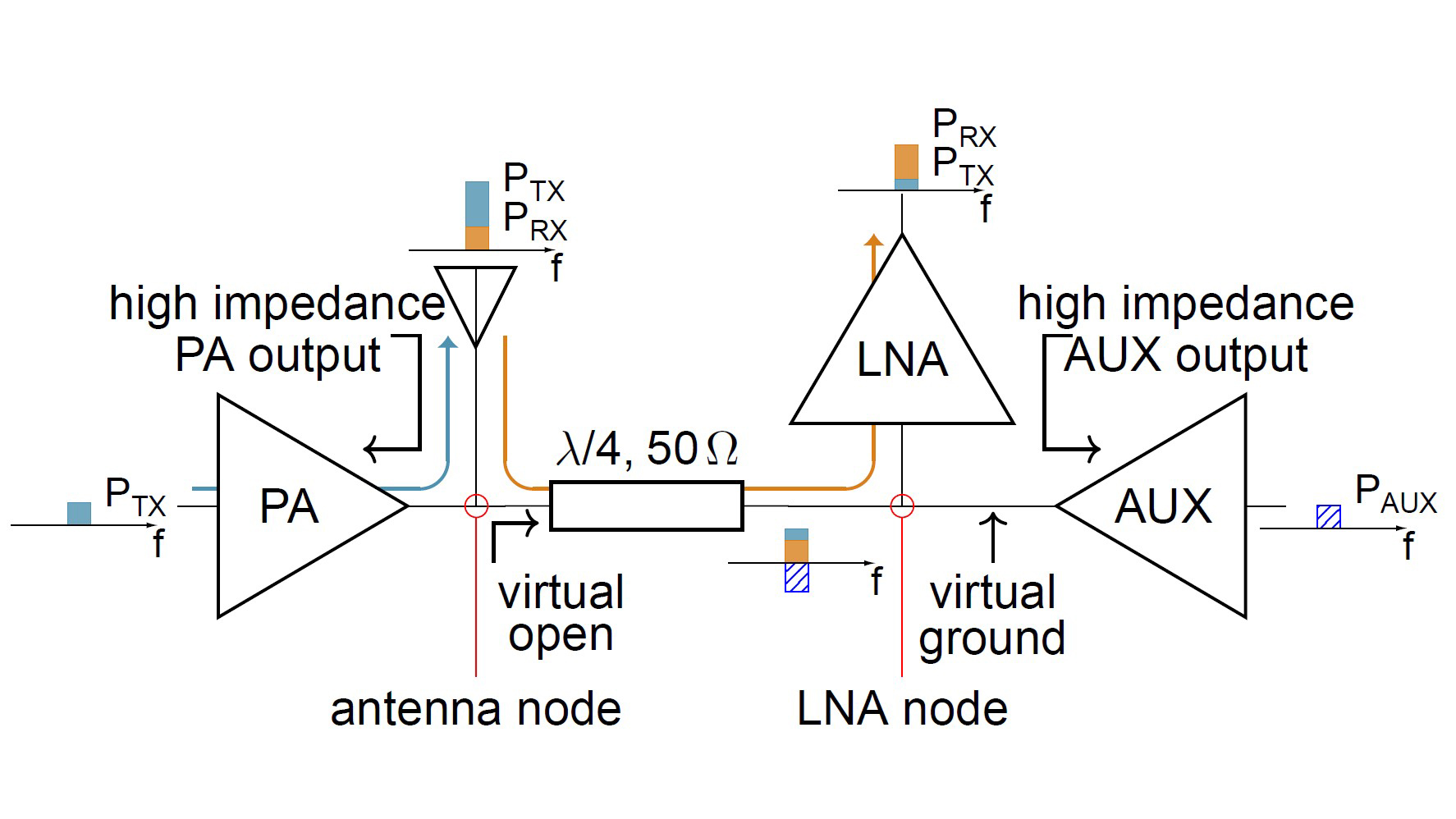
Fig. 1. Block diagram of novel full-duplex topology.
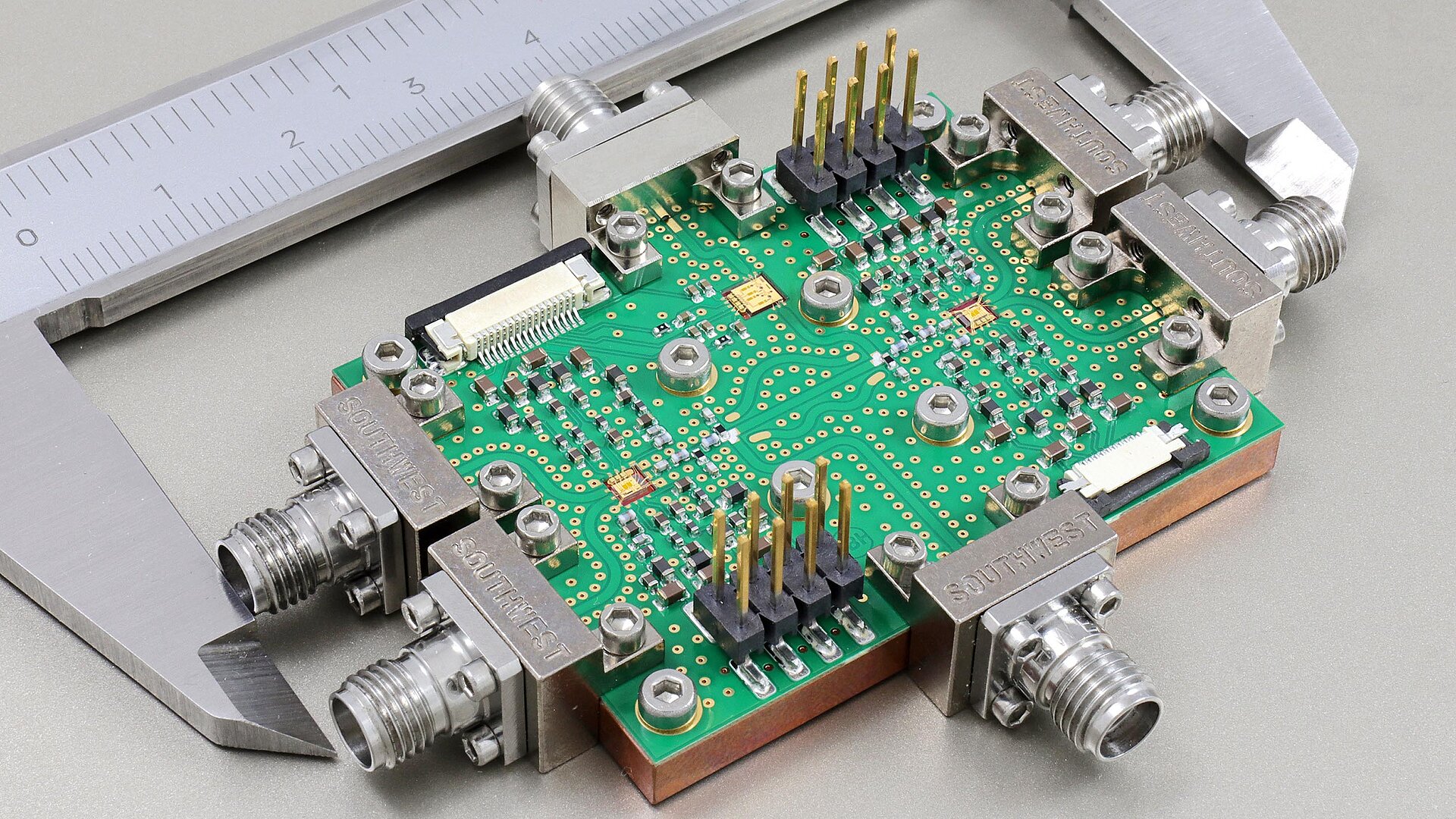
Fig. 2. Demonstrator module with the novel full-duplex topology.
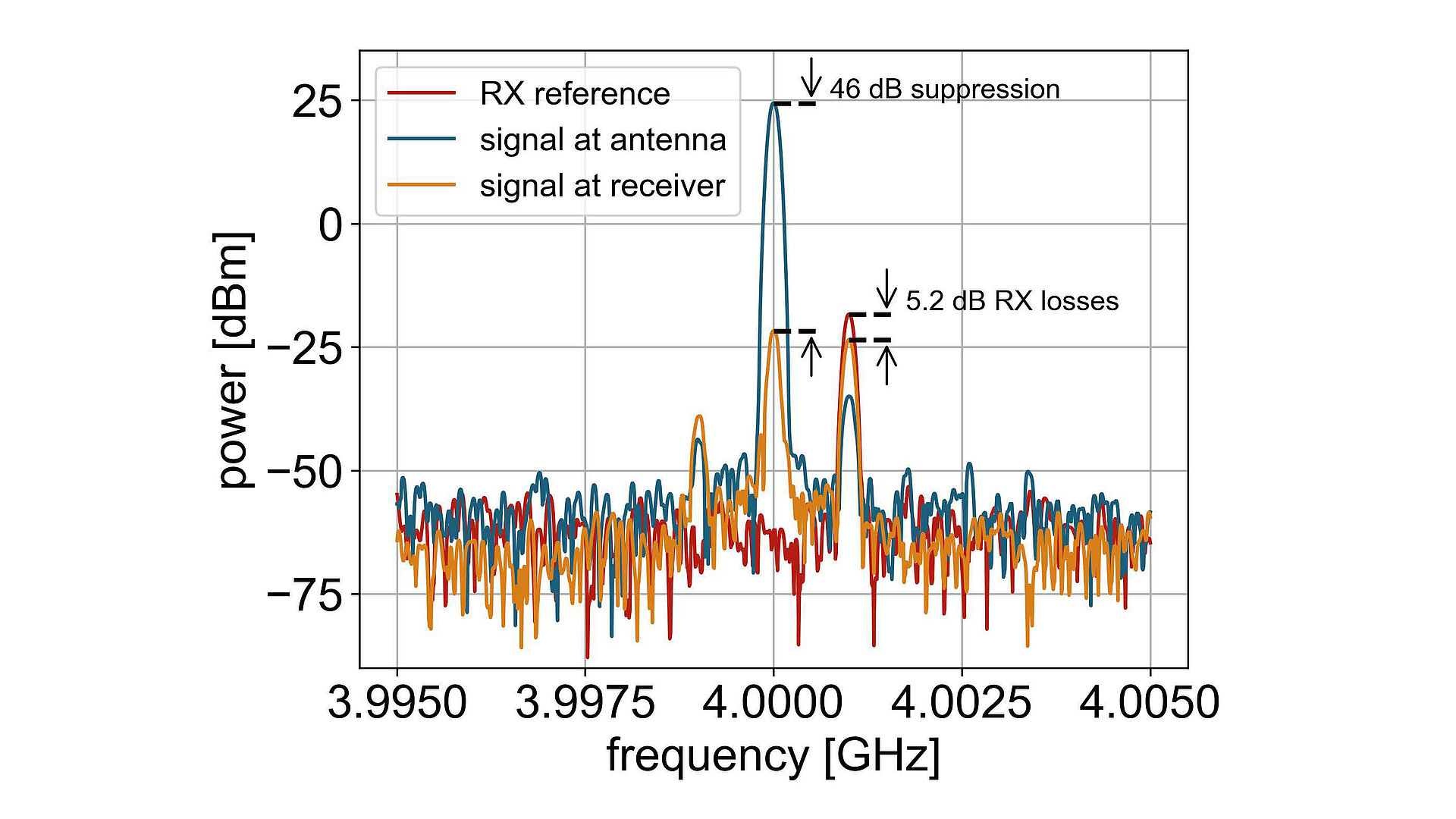
Fig. 3. Exemplary spectrum of transmit and receive signal at 4 GHz and 4.001 GHz, respectively, for a measured suppression of 46 dB.
Data traffic has increased steadily in recent years, leading to growing congestion in already heavily occupied frequency bands. Conventional half-duplex systems use the available spectrum inefficiently, as they either assign certain frequencies or timeslots for transmit and receive, thus losing typically half of the available channel capacity. In time-multiplexing operation, the receiver additionally switches off during the anticipated transmit time slot. Full-duplex transceivers overcome these limitations by transmitting and receiving on the same frequency channel at the same time. This approach enables higher data rates, improves spectrum efficiency, and reduces communication latency.
The main challenge in full-duplex systems is self-interference, as the strong transmitted signal leaks into the received signal. As a result, this transmit signal leakage must be strongly suppressed to ensure reliable data recovery and protect the circuit from overload or damage.
In cooperation with the Joint Lab BTU-CS FBH Microwave, we introduced a novel full-duplex front-end concept (Fig. 1, 2). The approach performs self-interference cancellation in the analog domain. It utilizes a λ/4 transmission line placed between the shared antenna and the receiver. The receiver consists of a low-noise amplifier (LNA), while a digital power amplifier (PA) generates the transmit signal. A portion of this signal crosstalks to the receiver, where it is cancelled by an auxiliary amplifier (a copy of the PA), thus suppressing the interference.
We evaluated this concept using demonstrators based on monolithically integrated circuits (MMICs) fabricated in-house. These include digital class-E PAs and a rugged LNA designed for operation at 4 GHz. We combined the MMICs with a PCB based on a Rogers RO4003C laminate. Two versions were realized: with and without LNA, the latter enabling evaluation of the potential suppression under simplified conditions, since creating the cancellation signal becomes less complex.
Our design targets high suppression without relying on a directive device (e.g., circulator) while achieving high output power. The front-end shows transmit losses of 5.2 dB, mainly due to the use of two PAs, one of which reaches a drain efficiency of 61 %. The insertion loss of the receiver path amounts to 5.2 dB. Combined with the measured noise figure (NF) of the LNA of 2.4 dB, the overall NF amounts to 7.6 dB.
An advantage of this GaN-based concept lies in its potential for higher transmit power. Measurements showed transmit powers of up to 34 dBm, whereas CMOS-based full-duplex implementations typically reach only 30 dBm or less.
In continuous-wave operation without the LNA, we measured a peak suppression of 52 dB at 4 GHz and an average suppression of 40 dB across the 3.6 to 4.0 GHz frequency range (Fig. 3). Paired with the linearity and ruggedness of the GaN-based LNA, this concept enables a full-duplex front-end without a directive device. The architecture also offers potential for integration into a single chip with a minimal footprint and operation over a wider frequency range, which is mainly limited by the λ/4 transmission line.
These results demonstrate the feasibility of a novel full-duplex transceiver front-end architecture. The concept offers strong potential for next generation communication and sensing systems.
This work received partial funding from Federal Ministry of Research, Technology and Space (BMFTR) within Research Fab Microelectronics Germany – FMD framework under grant 16FMD02 and through the project "GreenICT@FMD" under grant 16ME0505.